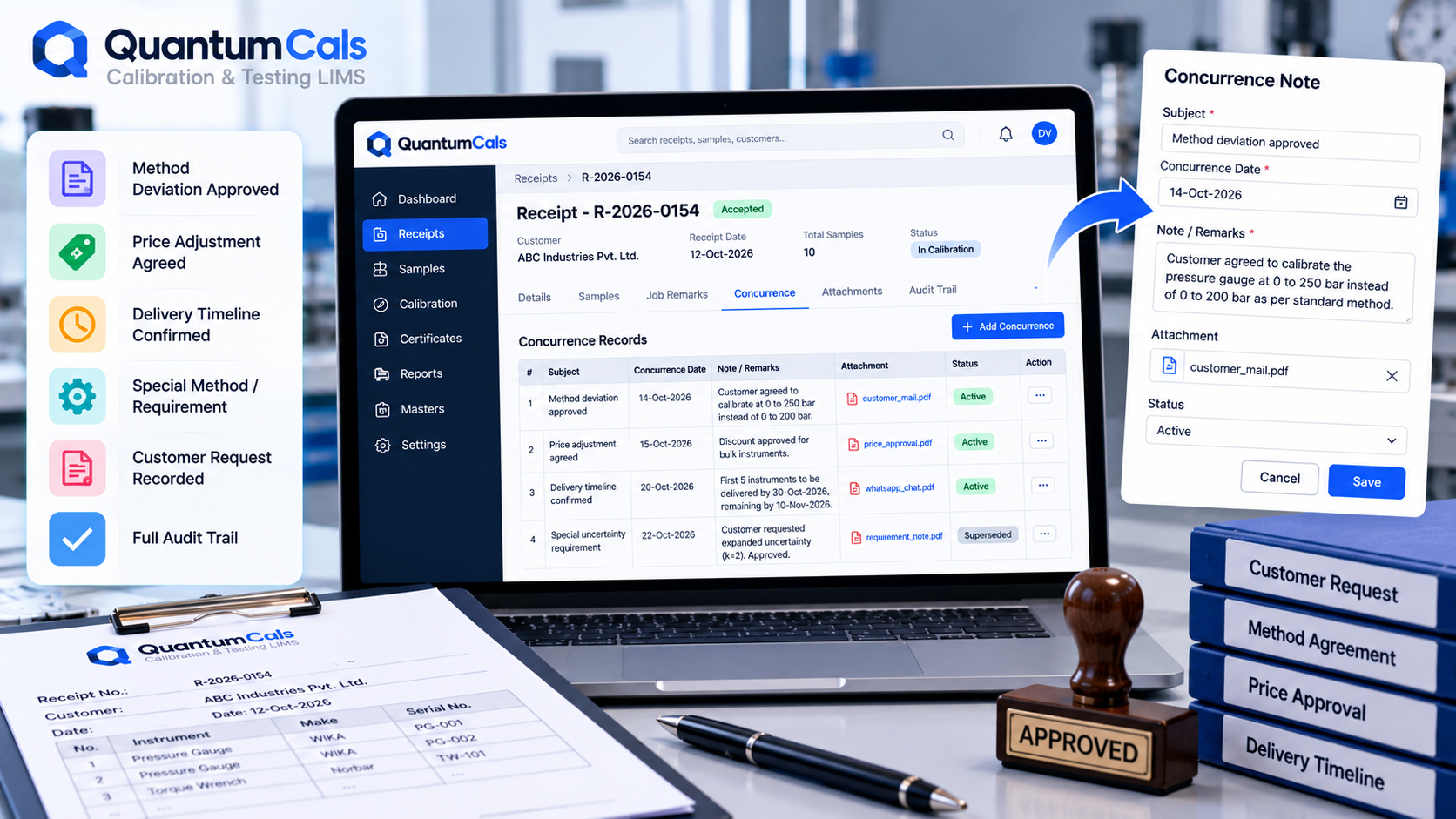
Accepting a receipt tells you the lab has taken responsibility for the instruments. It does not, by itself, record every agreement that was reached about how the job will be handled — a special method requested by the customer, a price adjustment agreed over a phone call, or a deviation that both sides accepted before work began. If that agreement lives only in someone's memory or a WhatsApp message, the lab has no record to point to when a question comes up months later.
This is what a receipt concurrence record is for: a structured place to log internal sign-off and agreed notes against a specific receipt, separate from day-to-day job remarks.
What a Concurrence Entry Captures
- Subject — a short label for what was agreed, such as "Method deviation approved" or "Delivery timeline confirmed."
- Concurrence date — when the agreement was reached, not when it was typed into the system.
- Note and remarks — the actual detail of what was discussed and agreed.
- Attachment — supporting evidence, such as a customer email or a signed note.
- Status — whether the concurrence is still active or has been superseded.
How Concurrence Differs from Job Remarks
Job remarks, covered in our earlier article on remarks and audit trails, are working notes an engineer adds while handling a job. Concurrence sits at the receipt level and is meant for formal agreements — the kind of thing a reviewer or an assessor would specifically ask to see, rather than day-to-day observations.
Why This Supports ISO/IEC 17025
ISO/IEC 17025 expects a lab to be able to demonstrate that deviations, special requests and method agreements were handled deliberately, not informally. A concurrence log tied to the receipt, with a date and a named status, is exactly the kind of evidence an assessor looks for when they ask "how do you record agreements with the customer that affect the result?"
When to Add a Concurrence Entry
- A customer requests a non-standard method or an extended uncertainty requirement.
- Pricing or turnaround time is renegotiated after the receipt was first accepted.
- A deviation from the usual process is agreed, such as calibrating a borderline instrument the lab would normally decline.
Ready to see it in your lab? Book a free 30-minute demo with the QuantumCals team and walk through the workflow with your own receipts and samples.